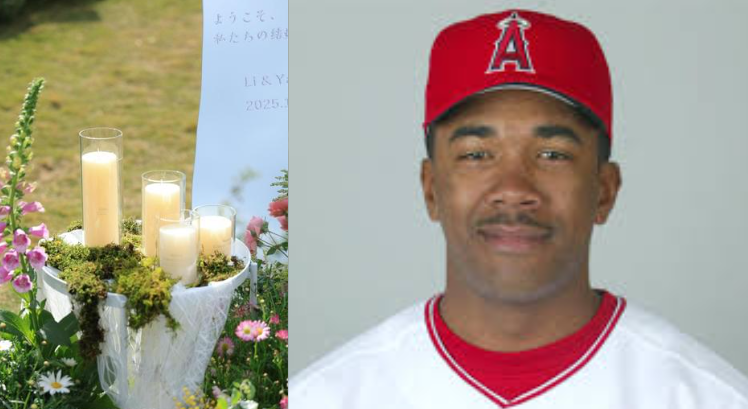
Baseball has always had room for two kinds of greatness — the flamboyant, quotable superstar who dominates headlines, and the player who simply shows up, does the job brilliantly, and lets the numbers do the talking. Garret Anderson was emphatically the second kind. For fifteen seasons in Anaheim, he built the most prolific offensive career in Los Angeles Angels history without ever seeking the spotlight, and in doing so became the kind of player that a franchise defines itself by. On April 16, 2026, Anderson died suddenly at 53 following a medical emergency at his Newport Beach home. The cause of de@th has not been officially disclosed. The baseball world lost one of its most consistent and quietly beloved figures, and the Angels lost the man who hit the series-winning run in the greatest moment in their history.
Quick Profile
| Detail | Information |
|---|---|
| Full Name | Garret Joseph Anderson |
| Born | June 30, 1972, Los Angeles, California |
| Died | April 16, 2026, Newport Beach, California |
| Age at Passing | 53 |
| Nationality | American |
| Profession | Professional Baseball Player (Retired); TV Analyst |
| Position | Left Fielder |
| Teams | California/Los Angeles Angels (1994–2008), Atlanta Braves (2009), Los Angeles Dodgers (2010) |
| Career Batting Average | .293 |
| Career Hits | 2,529 |
| All-Star Appearances | 3 |
| World Series | Champion, 2002 (Los Angeles Angels) |
| Hall of Fame | Angels Hall of Fame (inducted 2016) |
| Spouse | Teresa Anderson |
| Children | Brianne, Bailey, Garret “Trey” Anderson III |
| Cause of De@th | Sudden medical emergency; official cause not disclosed |
Early Life and Background
Garret Anderson was born on June 30, 1972, in Los Angeles, California, and attended John F. Kennedy High School in Granada Hills — a public school in the San Fernando Valley that would produce one of the most durable franchise players in Angels history. Wikipedia
Granada Hills sits in the northwestern edge of the San Fernando Valley, a community where youth sports were taken seriously and athletic talent had pathways to visibility. Anderson was not a one-dimensional prospect. He was a three-sport star in baseball, football, and basketball. In baseball, he won two All-Los Angeles City honours and two All-League honours, and as a junior helped his team win the Los Angeles City Championship. In basketball, he earned All-Los Angeles City and All-League honours as a senior. Wikipedia
That breadth of athletic ability across three distinct sports at the top level of Los Angeles high school competition was a meaningful signal. The city produces elite athletes constantly, and excelling across multiple sports in that environment requires a combination of natural talent and disciplined work that not every prospect maintains as the stakes rise.
Anderson met his wife, Teresa, in junior high school Wikipedia — a detail that, for a man who would go on to play seventeen seasons in the professional spotlight, speaks to a rootedness and personal stability that was also a signature of his professional life.
Career Journey
The Draft and Minor League Climb
Anderson was drafted by the California Angels in the fourth round of the 1990 MLB June Amateur Draft, straight out of Kennedy High School. Baseball-Reference.com Fourth round is a respectable selection — high enough to indicate genuine organisational confidence, not so high as to come loaded with the expectations that can crush young players. Anderson used that relative freedom from hype well.
He spent four years working through the minor leagues, developing the contact-hitting approach that would define his professional career. Prior to his first major league call-up, he had compiled a .346 batting average with 10 home runs and 82 RBIs in 95 games with the Triple-A Vancouver Canadians, and produced a 27-game hitting streak that was the longest in the minor leagues in two years. MLB That kind of sustained minor league production — consistent, not spectacular, but reliable — was a preview of exactly the player he would become.
Major League Debut and Breakthrough
Anderson made his major league debut on July 27, 1994, recording two hits in four at-bats against the Oakland Athletics. Wikipedia He was 22 years old and had five years of professional development behind him. The adjustment to the big leagues did not overwhelm him — it seemed to confirm what the minor league numbers had always suggested.
In 1995, Anderson became a mainstay in the Angels’ lineup, batting .321 with 16 home runs and 69 RBIs, finishing second in the AL Rookie of the Year voting to Marty Cordova of the Twins. Wikipedia The runner-up finish was a footnote — what mattered was that he had established himself quickly as someone capable of sustaining production against major league pitching. From that point forward, he never left the lineup.
The 2002 World Series — The Series-Winning Hit
The defining moment of Anderson’s career, and perhaps the defining moment in Angels franchise history, came in Game 7 of the 2002 World Series.
In 2002, Anderson finished fourth in MVP voting after compiling a .306 average with 29 home runs and 123 RBIs. In the third inning of Game 7, with the Angels trailing, he hit a three-run double that proved to be the series-winning hit as Anaheim claimed their first and only World Series championship. Wikipedia
That hit — a smooth, line-drive double to the gap from a left-handed swing that looked almost effortless — was Anderson in perfect miniature. No theatrics. No bat flip. Just a clutch piece of hitting at the highest-pressure moment of the baseball calendar. He hit .300 during the entire 2002 postseason run. Wikipedia
Peak Years and the 2003 All-Star Game
The year after the championship may have been Anderson’s best individual season. In 2003, he was named an American League All-Star. That All-Star weekend, he became the Home Run Derby Champion and was voted Most Valuable Player of the All-Star Game — the first player to win both honours since Cal Ripken Jr. in 1991. Wikipedia
It was a rare flash of individual recognition for a player whose value was usually discussed in the aggregate, across seasons, rather than in single-game explosions. For one weekend in Chicago, Anderson was the best player in the sport.
Records, Injuries, and Later Career
Anderson’s productivity extended deep into the 2000s. On August 21, 2007, he drove in a team-record 10 runs — including a grand slam and a three-run homer — in an 18-9 win over the New York Yankees, becoming the 13th player in major league history to achieve 10 RBIs in a single game. Wikipedia
He is the Angels’ all-time leader in games played (2,013), at-bats (7,989), hits (2,368), total bases (3,743), extra-base hits (796), doubles (489), and RBIs (1,292). The Big Lead Those are not records on the periphery of the franchise ledger — they are the central offensive records, the ones that define a player’s place in an organisation’s history.
After the Angels declined his option following the 2008 season, Anderson signed a one-year deal with the Atlanta Braves in 2009, where he collected his 2,500th career hit. He finished his playing career with the Los Angeles Dodgers in 2010, before announcing his retirement on March 1, 2011. Wikipedia
The Broadcasting Career
Retirement brought a surprising second act for a man who had been famously reluctant to talk to reporters throughout his playing days. From 2012, Anderson served as an Angels pregame and postgame reporter on Fox Sports West, Wikipedia and eventually became a regular analyst on the Angels Live broadcasts carried by FanDuel Sports Network West.
The transformation was genuine. Anderson’s analysis reflected his playing style — measured, precise, and based on deep experience rather than performance. His appearance alongside fellow Angels icon Tim Salmon gave the broadcast a sense of continuity that longtime Angels fans particularly appreciated: two men who had built that 2002 championship together, now helping younger audiences understand the game they had played so well.
Influence and Legacy
In 2016, Anderson was inducted into the Angels Hall of Fame. Yahoo Sports During his induction speech, he emphasised something that those who covered him had always noticed: that being a “good teammate” matters more than any individual statistic. “If you go out and respect your teammates and pull for ’em and give ’em tough love when you have to, it goes a long way,” he said. Hollywood Life
The Angels announced that players will wear a “GA” memorial patch for the remainder of the 2026 season. Angels owner Arte Moreno said: “Garret was a cornerstone of our organisation throughout his 15 seasons and his stoic presence in the outfield and our clubhouse elevated the Angels into an era of continued success. Garret will forever hold a special place in the hearts of Angels fans for his professionalism, class, and loyalty throughout his career and beyond.” Yahoo Sports
That last phrase — “and beyond” — matters. Anderson stayed loyal to the Angels organisation after retirement, returned to the broadcast booth to serve a new generation of fans, and carried himself with the same dignity in front of a camera that he had shown for fifteen years in the field.
Personal Life
Anderson met his wife, Teresa, in junior high school Wikipedia — a relationship that endured through the entire arc of his professional career and his life after baseball. He is survived by Teresa, their daughters Brianne and Bailey, and their son Garret “Trey” Anderson III. Yahoo Sports
Throughout his career, Anderson was involved in charitable work, including the Boy Scouts of America Recruiting Campaign, the Responsible Fatherhood Campaign, hospital visits with Angels’ Wives programmes, and assistance with the California Department of Social Services. He and Teresa also established a charitable foundation, “Determined to Dream,” to support Charles MacLay Middle School in Pacoima. MLB
The Pacoima connection is particularly meaningful — it is a community in the San Fernando Valley not far from where Anderson grew up, and the foundation’s focus on a local middle school reflects the kind of quiet, community-rooted giving that characterised everything he did publicly.
Net Worth
Anderson earned substantial salaries during his career, most notably a four-year contract extension worth $48 million agreed in 2004. Wikipedia His income also came from his broadcasting work and various charitable and business activities. Estimates that circulate publicly have not been verified, and given Anderson’s characteristically private approach to his personal affairs, specific figures should be treated as speculative.
Cause of De@th
No official cause of death was provided by the Angels or the Anderson family beyond the characterisation of the passing as “sudden.” TMZ reported that Anderson suffered a medical emergency at his home in Newport Beach, California. Yahoo Sports He died on April 16, 2026. He was 53 years old.
Conclusion
Garret Anderson played baseball the way most people wish everything would work: with consistency, loyalty, and an absence of drama. He showed up for fifteen seasons, drove in runs, hit line drives, played good defence, and kept his mouth shut when it would have been easy to seek attention he had plainly earned. The franchise records he holds are not the product of one or two spectacular seasons — they are the accumulated result of showing up and being excellent for a very long time. The three-run double in Game 7 of the 2002 World Series is the moment most will remember, and it is a worthy emblem: calm, efficient, and decisive when it mattered most. That was Garret Anderson. The Angels, and baseball, will not easily find another one like him.
Frequently Asked Questions
Who was Garret Anderson? Garret Joseph Anderson was an American professional baseball left fielder born on June 30, 1972, in Los Angeles, who played 17 seasons in Major League Baseball, primarily for the California/Los Angeles Angels. A three-time All-Star, he is the Angels’ all-time leader in hits, games played, RBIs, doubles, and total bases. Wikipedia
What was Garret Anderson’s cause of de@th? No cause of death was officially disclosed. The Angels described his passing as “sudden,” and TMZ reported he suffered a medical emergency at his Newport Beach, California home. Yahoo Sports He died on April 16, 2026, at the age of 53.
What did Garret Anderson do in the 2002 World Series? Anderson hit .300 throughout the Angels’ 2002 postseason run, including a three-run double in the third inning of Game 7 that proved to be the series-winning hit Wikipedia as the Angels claimed their first and only World Series championship.
What records did Garret Anderson hold? He is the Angels’ all-time leader in games played (2,013), at-bats (7,989), hits (2,368), total bases (3,743), extra-base hits (796), doubles (489), and RBIs (1,292). The Big Lead His career batting average was .293 with 2,529 career hits.
Was Garret Anderson in the Hall of Fame? He was inducted into the Angels Hall of Fame in 2016. Yahoo Sports He appeared on the National Baseball Hall of Fame ballot in 2016 but received limited support, partly due to a career on-base percentage that undermined his otherwise impressive statistics.